
The Audit Committee Question Coming: Can You Prove AI Control?
Audit committees are moving from AI policy questions to AI control questions. Management should be prepared to show where AI is operating, who owns the risk, how controls work, and whether the controls can be tested.
Our previous articles established that AI governance has become a control issue, and that the frameworks are beginning to define what good looks like. Defining accountability and moving into the audit committee room is the natural next stage. Leaders in this stage are asking whether the organization knows where AI is operating, who owns the risk, how the controls work, and whether any of it can be tested.
The Audit Committee Question Is Coming
Many audit committees have spent the last two years asking management whether the company has an AI policy. Now the questions are “Where is AI operating in the business, and how do we know it is controlled?”
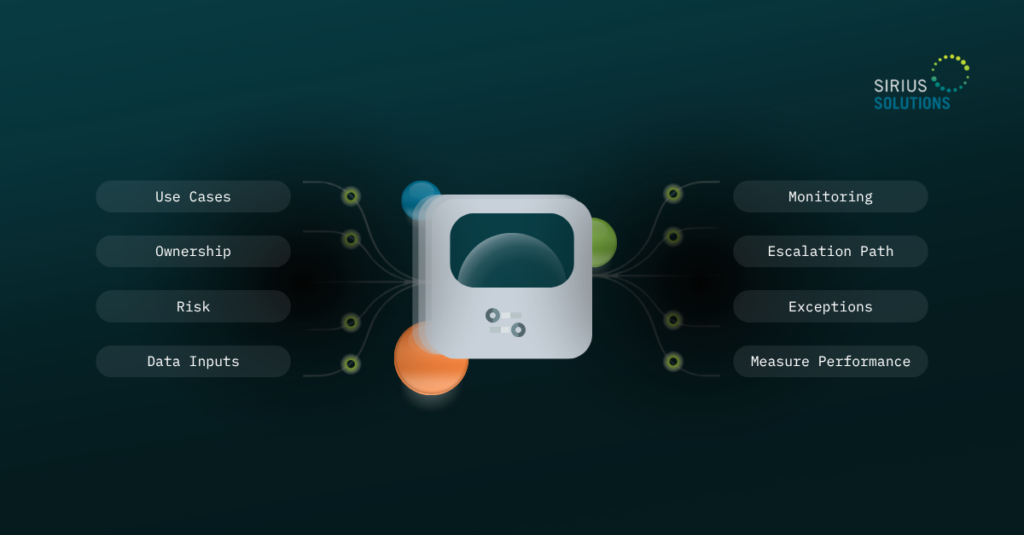
Management is being forced to identify actual AI use cases, assign ownership, classify risk, document data inputs, define monitoring, set escalation paths, track exceptions, and explain how the organization knows the model is performing as intended.
Management owns the risk. The business owns the process. IT and data teams own many of the technical components. Legal, compliance, privacy, security, and finance all have a role depending on the use case. And Internal Audit’s role is to provide assurance that the governance model is real, operating, and aligned to risk. This requires testing whether policy has reached the places where AI is actually being used.
Where Companies Are Most Likely to Find Gaps
Initial AI governance reviews will be uncomfortable because they will show that use is more mature than control.
The most anticipated gaps are:
- An incomplete inventory of AI use cases
- Unclear ownership for tools already in production
- No consistent risk-tiering method
- Limited documentation of data sources and restrictions
- Weak evidence around human review
- No clear standard for model changes
- No monitoring for output quality, drift, bias, or misuse
- No defined incident response path
- No audit trail for decisions made or influenced by AI
- Third-party AI tools being used without enough visibility into vendor controls
This points to AI moving faster than the governance model, which is what happens with new technology when adoption is easier than control.
Every gap cannot be closed at once. But it is important that leadership can see the gaps clearly enough to prioritize the ones that matter, such as those affecting financial, operational, regulatory, or reputational exposure.
What CFOs and CAEs Should Do Now
The first move is to find the AI.
Create a practical inventory of where AI is being used today. Not only approved enterprise platforms, but also embedded AI inside existing software, function-specific tools, vendor platforms, workflow automation, reporting tools, and employee use of generative AI.
Then classify the use cases by risk.
- Is AI influencing financial reporting?
- Is it touching customer decisions?
- Is it using sensitive data?
- Is it making or recommending employment decisions?
- Is it connected to regulated activity?
- Is it operating through a third party?
- Is it producing outputs that management relies on?
- Is it agentic, meaning it can take steps rather than only provide information?
Once the use cases are visible, AI governance becomes practical and auditable.
- Assign owners
- Define what evidence is required
- Document data inputs and restrictions
- Set standards for monitoring, testing, and change control
- Decide what requires human review
- Create an escalation path for incidents and exceptions
- Build audit procedures around the highest-risk use cases first
The Point of AI Governance Is Not to Slow the Business Down
There is a natural fear that governance will become the thing that slows AI adoption. But good governance should make AI safer to scale.
It gives leaders confidence that the organization knows where AI is operating, what risks it creates, who owns those risks, and how they are being monitored. It helps separate valuable use cases from noise and helps prevent shadow AI from becoming operational dependency. It helps management understand whether AI is improving the work or simply creating another layer of review, confusion, and exposure.
That matters because AI is no longer experimental. It is moving into workflows, reports, decisions, transactions, and customer interactions.
If AI is shaping business decisions, then AI governance has to be designed, operated, tested, and improved like any other part of the control environment.
Sirius Solutions’ Commitment to AI Governance and Audit Readiness
At Sirius Solutions, we help boards, audit committees, CFOs, CIOs, chief internal audit executives, compliance leaders, technology leaders, and business stakeholders make AI risk visible, assign ownership, strengthen controls, and build assurance around the AI already operating inside the business. The organizations that govern AI with discipline will be the ones best positioned to use it with confidence, protect trust, and avoid learning about control gaps only after they become expensive. To discuss how AI governance, control design, and audit readiness can help your organization move from AI policy to AI assurance, contact the Sirius Solutions Financial Advisory team. Solutions@Sirsol.com
FAQs
What AI questions are audit committees starting to ask?
Audit committees are moving from asking whether the company has an AI policy to asking where AI is operating, how it is controlled, who owns the risk, and whether the controls can be tested.
What are common AI governance gaps?
Common gaps include incomplete AI inventories, unclear ownership, inconsistent risk tiering, limited data documentation, weak human review evidence, unclear change standards, limited monitoring, no incident response path, and weak visibility into third-party AI controls.
What should CFOs and CAEs do first?
The first step is to find the AI by creating a practical inventory of approved tools, embedded AI, vendor platforms, workflow automation, reporting tools, and employee use of generative AI.
How should AI use cases be prioritized?
Use cases should be classified by risk, including whether AI influences financial reporting, customer decisions, sensitive data, employment decisions, regulated activity, third-party operations, management reporting, or agentic actions.
Does AI governance slow adoption?
Good governance should make AI safer to scale. It gives leaders confidence that AI use is visible, controlled, monitored, and aligned to risk.