AI Governance Frameworks Are Forming. Can You Evidence Control?
AI governance frameworks are beginning to converge around a practical expectation: organizations should be able to govern, map, measure, manage, test, and evidence AI risk in the business.
Once AI governance moves into the control environment, what can become confusing is knowing what standard organizations should use to judge whether their program is working. There are now multiple frameworks, regulations, and professional guidance documents shaping how AI risk should be governed, operated, tested, and reported. AI governance is no longer a loose set of principles. It is becoming a structured discipline.
As discussed in the first article in this series, the AI governance conversation has shifted from permission to evidence. The next question is what good looks like.
The Frameworks Are Starting to Say the Same Thing
Organizations no longer have to guess what good looks like in AI governance.
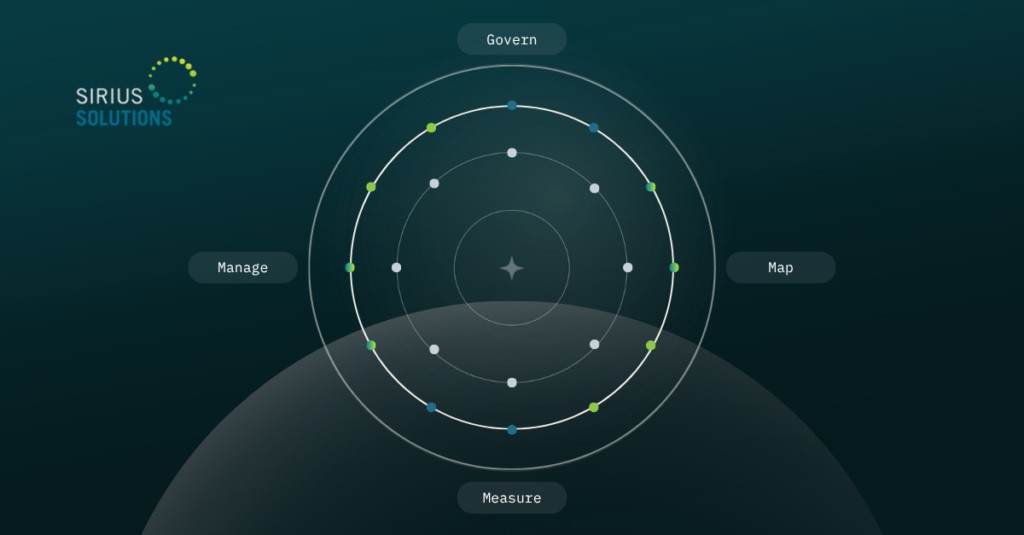
Managing AI risk happens through four functions.
- Govern
- Map
- Measure
- Manage
And the work is organized around these three domains:
- AI Governance and Risk: who owns AI risk, what policies require, how data is handled, where privacy and regulatory exposure exist, and whether procedures and standards are defined.
- AI Operations: change management, monitoring outputs and decisions, testing, threats and vulnerabilities, incident response, and model performance.
- The Assurance Layer: how the organization plans, tests, gathers evidence, and reports on AI.
After understanding this, the question that every CFO, CAE, CIO, compliance leader, and audit committee member starts asking is “Could we evidence any of this for the AI already running in our business?”
AI Has Entered the Control Environment
AI is a control environment topic that touches data quality, user access, change management, third-party risk, cybersecurity, privacy, financial reporting, operational decision-making, customer experience, workforce design, and regulatory compliance. AI is already influencing forecasts, pricing, contract review, claims review, fraud detection, customer communications, coding, procurement, HR screening, financial analysis, and executive reporting.
That means AI can create risk in the places leadership has to watch closely:
- Flawed management reporting
- Operational disruption
- Regulatory exposure
- Eroded customer trust
- Inaccurate financial analysis
- Unclear accountability
- Frustrated employees
- Decisions no one can explain
This is why AI governance has to move into the assurance plan. Not every AI use case is high risk, but the AI use cases that are tied to executive financial, operational, regulatory, or reputational exposure matter deeply.
For audit committees and management teams, the next step is practical: determine where AI is operating, who owns it, how it is controlled, and whether those controls can be tested. The next article in this series outlines where companies are most likely to find gaps.
Sirius Solutions’ Commitment to AI Governance and Audit Readiness
At Sirius Solutions, we help boards, audit committees, CFOs, CIOs, chief internal audit executives, compliance leaders, technology leaders, and business stakeholders make AI risk visible, assign ownership, strengthen controls, and build assurance around AI already operating inside the business. The organizations that are successfully governing AI are using it confidently, protecting trust, and avoiding the risk of learning about control gaps only after they become expensive. To discuss how AI governance, control design, and audit readiness can help your organization move from AI policy to AI assurance, contact Sirius Solutions. Solutions@Sirsol.com
FAQs
What do AI governance frameworks help organizations do?
They help organizations define how AI risk should be governed, mapped, measured, managed, tested, and reported.
What are the core functions of AI risk management?
The work is commonly organized around four functions: govern, map, measure, and manage.
Why does AI governance need an assurance layer?
Because leaders need more than policies and principles. They need a way to plan, test, gather evidence, and report on whether AI controls are operating as intended.
Which AI use cases should receive the most attention?
The highest priority use cases are those tied to financial, operational, regulatory, customer, workforce, cybersecurity, privacy, or reputational exposure.
What question should leaders ask after reviewing AI governance frameworks?
They should ask whether the organization could evidence the same expectations for the AI already operating inside the business.